Vibration Monitoring with Geophones
Geophones continuously measure vibrations, enabling reliable monitoring of construction projects and infrastructure. Automatic alerts are triggered when predefined thresholds are exceeded.
Measurement Principle and System Configuration
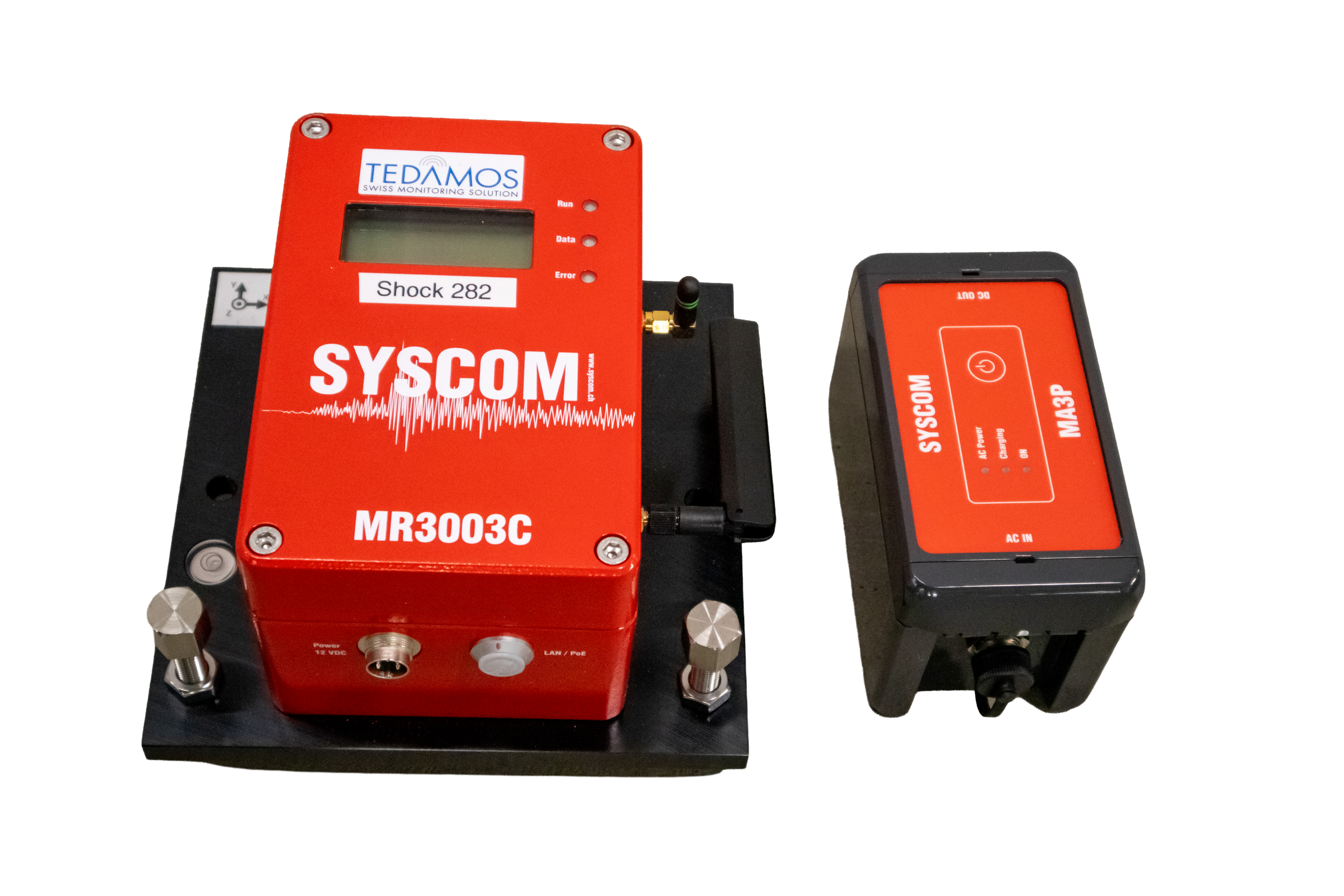
Our geophones use triaxial velocity sensors to measure vibrations within a velocity range of ±100 mm/s and a frequency range of 1 to 315 Hz. Designed for demanding environments, they operate reliably at temperatures from –20 °C to +50 °C.
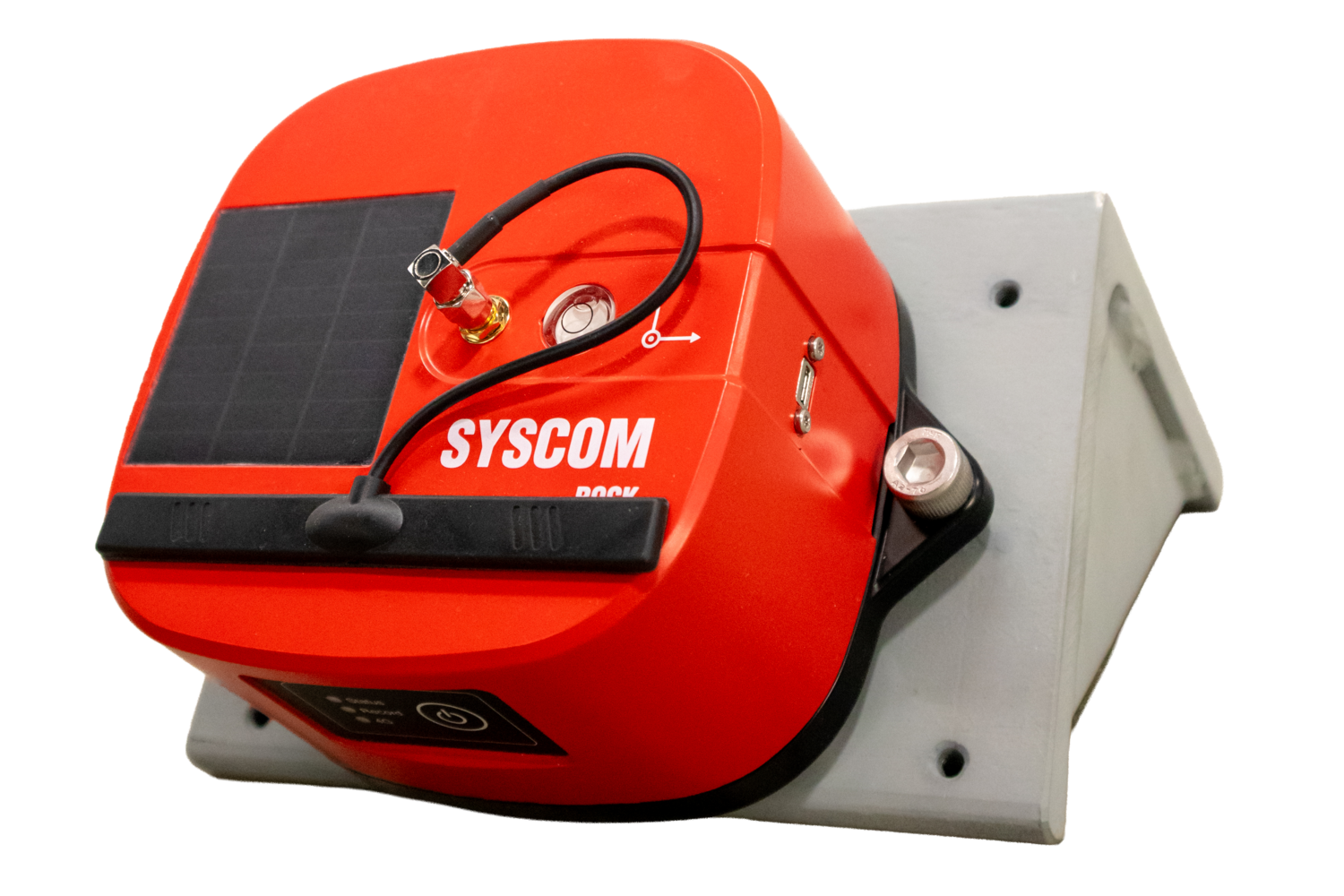
The devices are typically mains-powered but can also be equipped with solar panels, making them suitable for autonomous monitoring in outdoor locations.
Vibrations are continuously monitored in accordance with VSS 40 312:2019, DIN 4150-2, DIN 4150-3 and other applicable European standards.
If predefined thresholds are exceeded, the system automatically performs a frequency analysis and immediately sends alerts via SMS or email. Sirens and warning lights can also be activated directly if required.
Applications
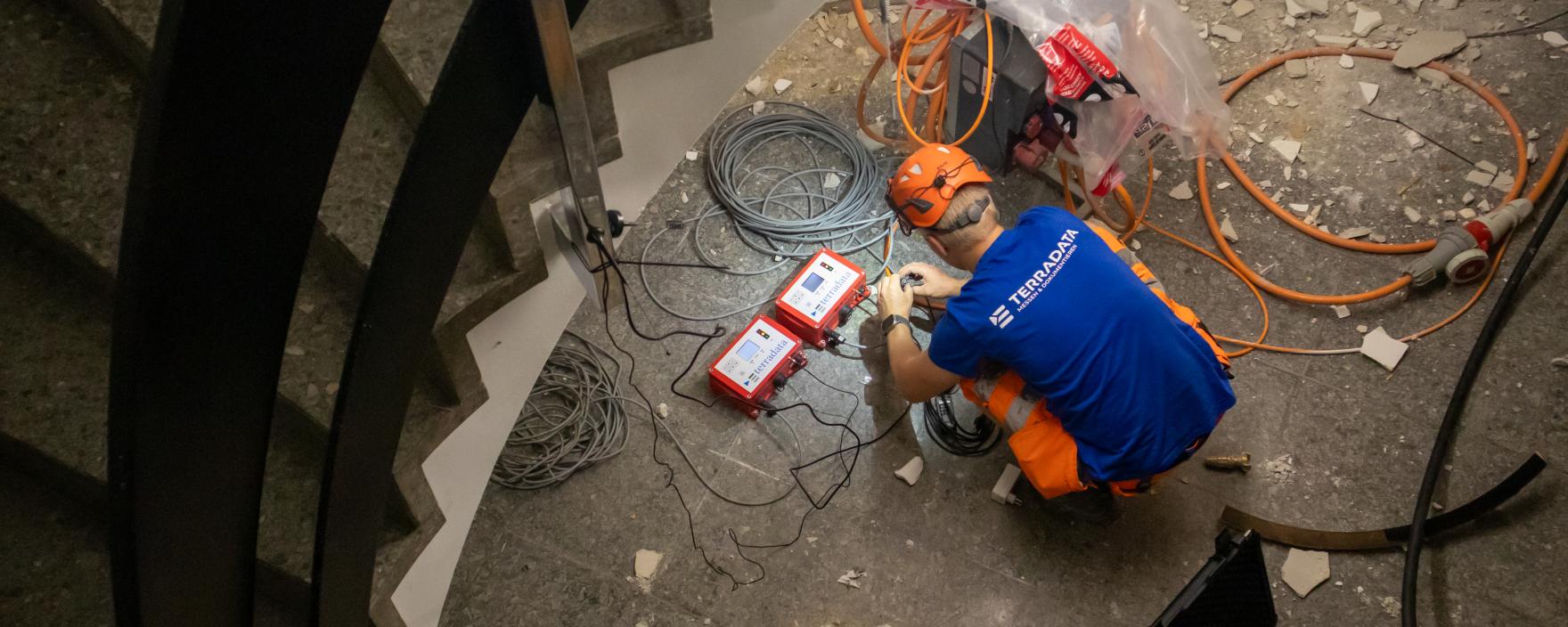
Geophones are primarily used for the continuous monitoring of construction-induced vibrations, particularly during demolition, drilling, pile driving and other vibration-intensive activities. Monitoring focuses on the impact on nearby buildings, helping to identify potential risks of damage at an early stage and implement appropriate protective measures.
In Switzerland, vibration effects on structures are assessed in accordance with VSS 40 312. Continuous monitoring and automatic alerts when predefined thresholds are exceeded help ensure safe construction operations while providing documented evidence of compliance with applicable vibration limits.
In addition to protecting buildings, geophones can be used to monitor the effects of vibrations on people inside buildings. Potential disturbance and discomfort can be assessed in accordance with DIN 4150-2. As measurement locations and frequency requirements differ, assessing structural damage and human exposure requires separate measurement points and appropriately selected sensors.
Other applications include monitoring vibrations from rock blasting, industrial operations, and road and rail traffic. Vibration measurements can also be used to analyse the dynamic behaviour of structures, such as determining the natural frequencies of bridges and high-rise buildings. The resulting data provides valuable insights into structural vibration characteristics and safety.