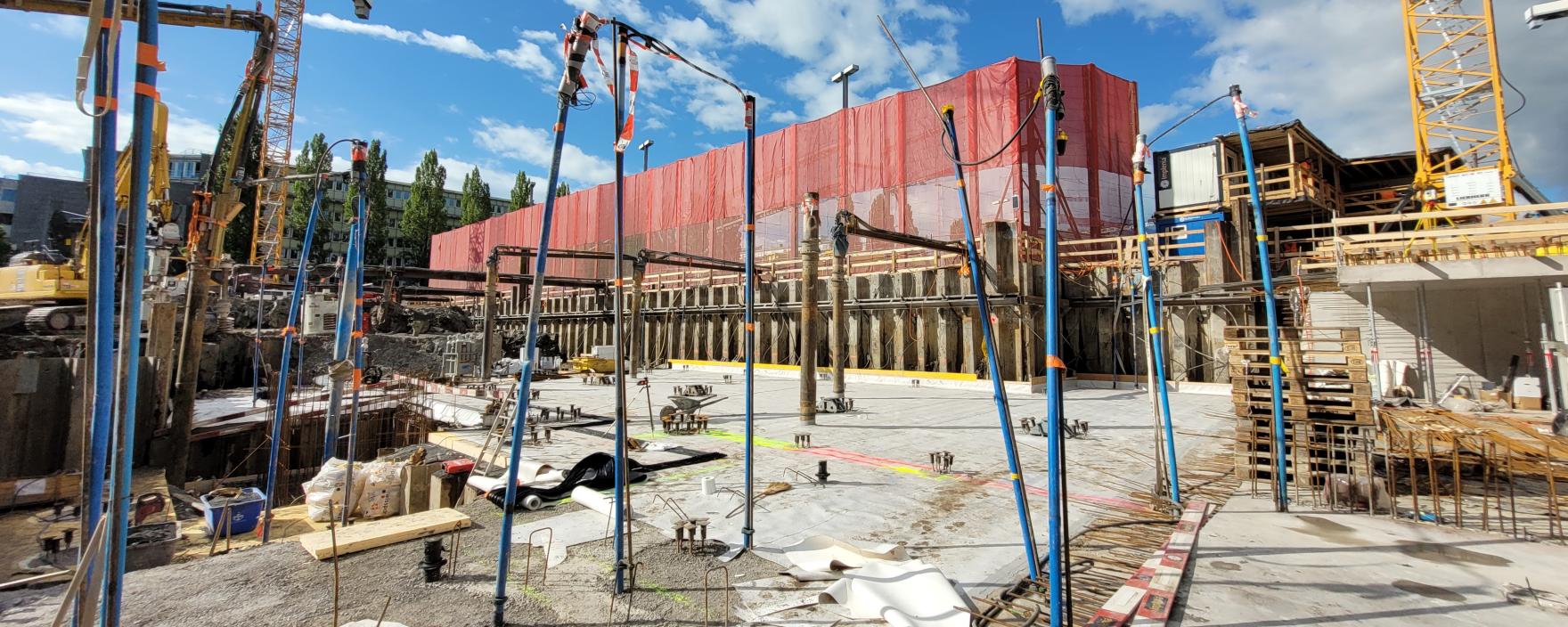
Piezometer
Piezometers measure water pressure below ground and provide important information about groundwater levels and hydraulic conditions in soils and rock. They are used wherever the stability of structures, slopes or embankments is influenced by groundwater conditions.
They measure changes in groundwater levels, increases and decreases in water pressure, and hydraulic gradients caused by construction activities, precipitation, drainage measures or changes in loading. The measurement data is particularly useful for assessing uplift pressure, seepage, slope and excavation stability, as well as the effectiveness of drainage and waterproofing systems.
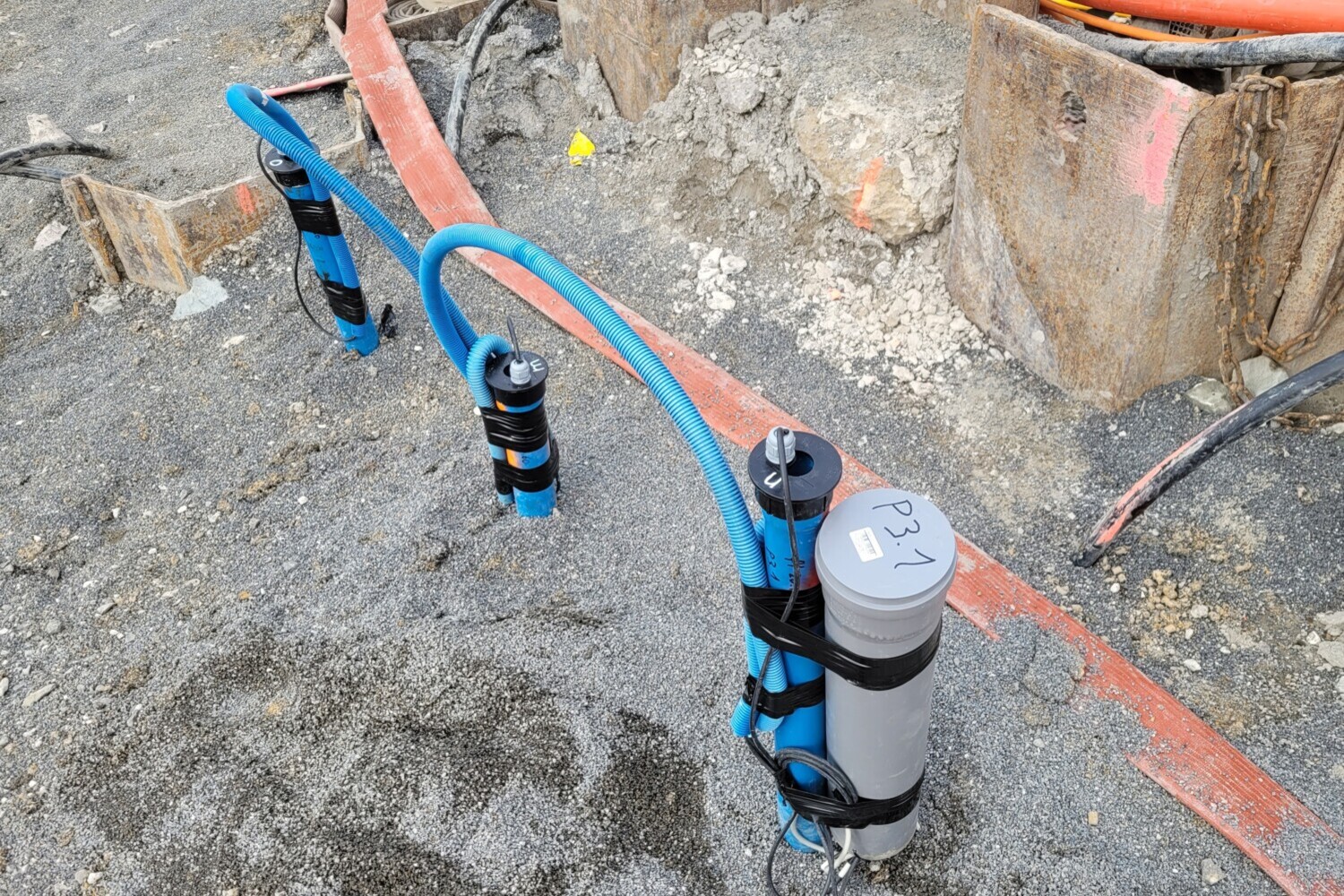
The sensor is installed in a borehole within an open or filtered monitoring section and measures the water pressure of the surrounding groundwater.
In most cases, the measurement data is transmitted at regular intervals to the TEDAMOS servers via battery-powered TEDAMOS LoRa wireless nodes. This eliminates the need for cabling, reducing installation effort as well as the risk of measurement interruptions caused by cables to central data loggers being damaged during construction work.
In TEDAMOS, the measurement data is often visualised in time-series charts together with precipitation data. Thresholds can also be defined to trigger automatic alerts.
Benefits
- Continuous monitoring of groundwater levels and water pressure
- No cabling required thanks to battery-powered LoRa wireless nodes
- Early detection of critical changes
- Automatic data transmission to the TEDAMOS web portal
- Custom alerts when thresholds are exceeded
Applications
Piezometers are used wherever groundwater conditions and water pressure need to be monitored over extended periods. Typical applications include:
- Excavations and special foundation engineering
- Slopes and landslides
- Dams, dikes and reservoirs
- Tunnelling and underground construction
- Landfills and contaminated sites
- Groundwater monitoring
- Long-term geotechnical monitoring

Piezometer or Pore Water Pressure Measurement (PWP)?
Although both methods measure water pressure below ground, they differ in terms of installation and monitoring purpose.
A piezometer measures water pressure within an open or filtered monitoring section. This puts the sensor in direct contact with the surrounding aquifer, making it particularly suitable for monitoring groundwater levels and general hydraulic conditions.
For pore water pressure measurement (PWP), the sensor is installed within a sealed monitoring zone. The borehole is sealed above and below the sensor so that only the water pressure within a defined soil layer is measured. This allows the pore water pressure of individual geological layers to be monitored separately.
While piezometers are primarily used to monitor general groundwater conditions, PWP measurements provide targeted monitoring of individual soil layers and their pore water pressure.